How Often Should You Handle a Bearded Dragon?
How Often Should You Handle a Bearded Dragon?
So you have a bearded dragon — or you are about to — and the big question is staring back at you from inside the tank: how often should you actually pick this animal up? Every day? Twice a day? Will you stress it out by handling it too much, or make it hand-shy by handling it too little? Here is the honest answer: daily handling is the goal for almost every dragon, but the right session length depends on age, tameness, and the individual animal in your hands. Below you get the exact numbers, the rules that keep every session positive, and a planner that builds a schedule for your specific dragon.
The short answer, by age
If you want one number to start with, use this table. These are the ranges most experienced keepers and care guides converge on — a settled adult does best with 15 to 30 minutes of handling a day, while babies need much shorter sessions.
| Age | Sessions | Length | Rest days |
|---|---|---|---|
| Hatchling (0–2 months) | Once daily | 5–10 minutes | 2 per week |
| Baby (3–6 months) | Once daily | 10–15 minutes | 1 per week |
| Juvenile (7–12 months) | 1–2 times daily | 15–20 minutes | 1 per week |
| Adult (12+ months) | 1–2 times daily | 15–30 minutes | 1–2 per week |
These are starting points, not laws: your dragon’s body language outranks any chart.
A settled adult thrives on 15 to 30 minutes of handling per day, according to the ReptiDirect care sheet. That is the sweet spot most keepers land on: enough time for bonding and health checks, short enough to protect the basking hours that keep your dragon digesting and healthy.
Hatchlings and babies: keep it short and sweet
Baby bearded dragons are more delicate and more easily stressed than adults, and they need most of their energy for explosive early growth. Keep sessions brief — 5 to 10 minutes for a hatchling, 10 to 15 for an older baby — and keep them infrequent enough that the little one still spends most of the day basking, eating, and growing.
The goal at this age is short, calm, positive associations: a few minutes in warm hands, then back to the tank before any stress starts.
Juveniles: building the daily habit
Between 7 and 12 months, your dragon has the size and confidence for real handling sessions: 15 to 20 minutes once or twice a day. This is the age where consistency pays off most. A juvenile handled a little every day usually grows into a calm adult; a juvenile handled rarely often stays skittish.
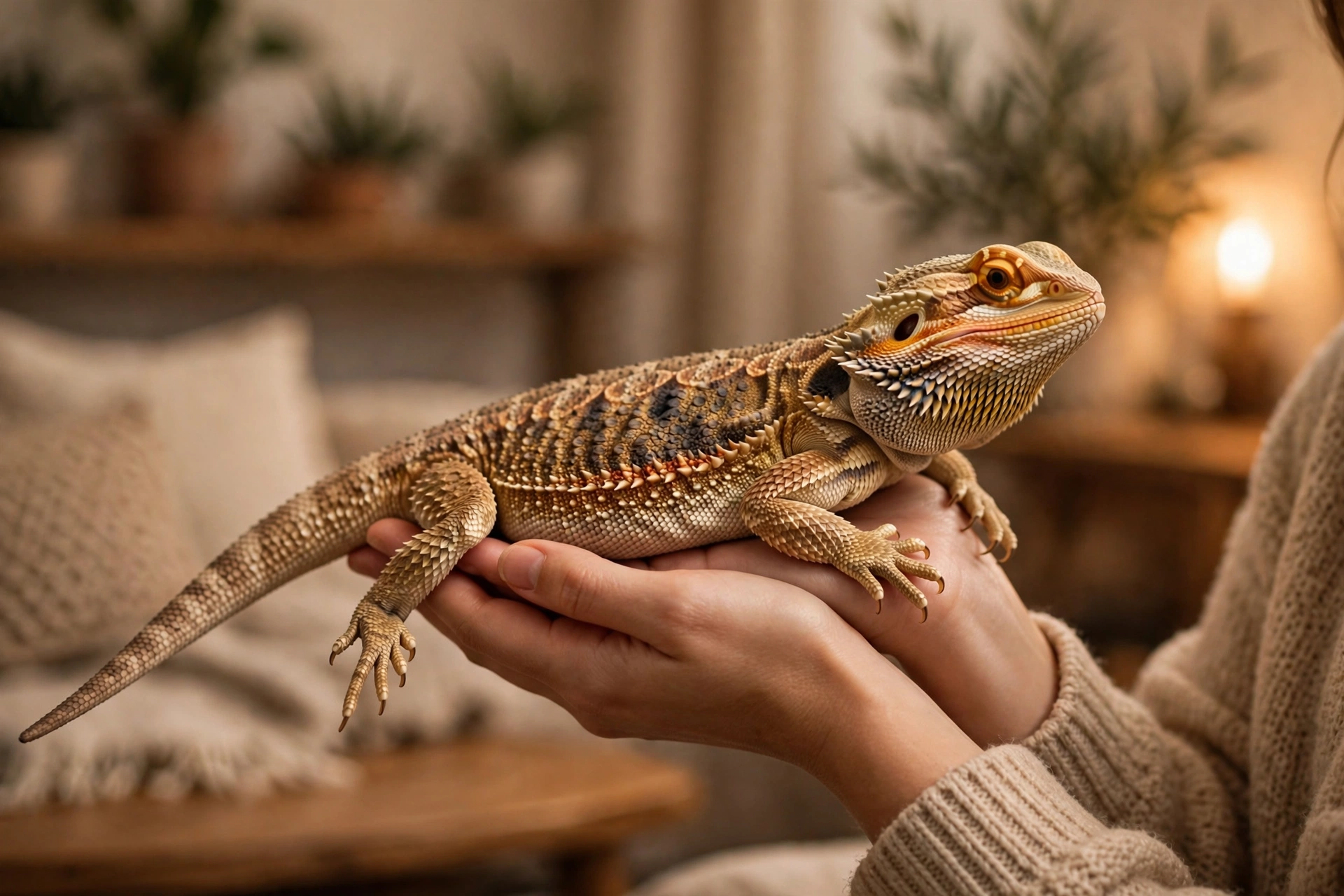
Watch for the best compliment a dragon can pay you: the “sexy leg.” When a bearded dragon stretches one hind leg out casually while being held, it is fully relaxed — that loose, sprawled posture is the goal state you are working toward.
That stretched-out hind leg has a nickname among keepers — the “sexy leg” — and it is one of the most reliable signs your dragon is genuinely comfortable being handled. A tense dragon tucks everything in; a relaxed one sprawls.
Adults: the settled routine
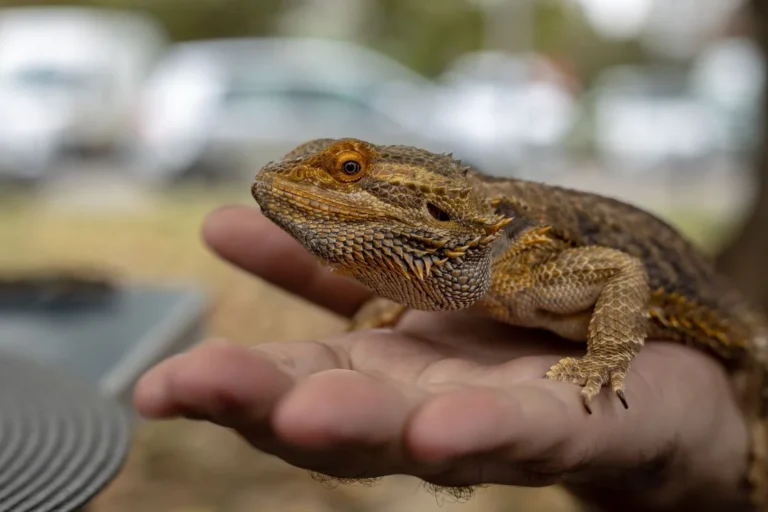
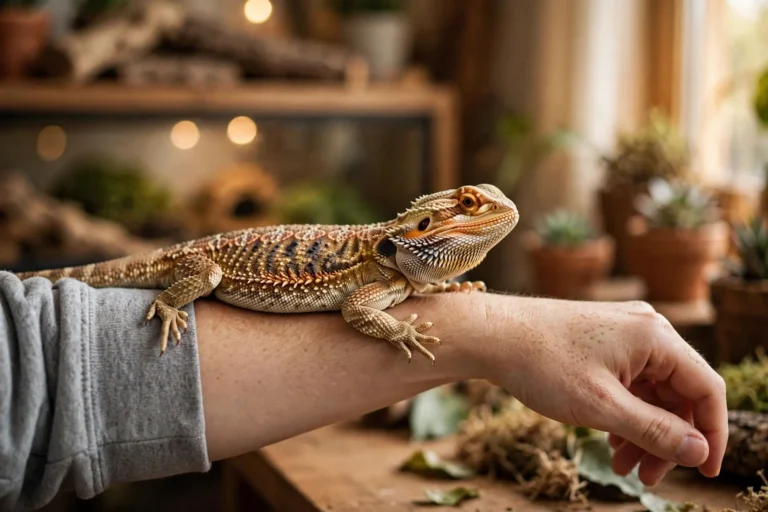
A fully tamed adult is the easiest handling partner you will ever own. Fifteen to thirty minutes a day, in one session or two shorter ones, keeps the bond strong and gives you a daily chance to check eyes, toes, vent, and body condition. Many calm adults happily stay out for 45 to 60 minutes — follow the dragon, not the clock.
One thing adults still need: their basking hours protected. Handling is enrichment, not a replacement for heat and UVB time, so schedule sessions around the basking schedule rather than through it. Our guide to 9 Ways to Keep Your Bearded Dragon Happy and Active treats handling as one enrichment tool among several, which is exactly the right way to think about it.
Build your handling plan
Age gives the starting numbers, but tameness changes everything. Answer two questions for a personalized plan with progression milestones.
🐉 Handling Planner
New or nervous dragon? Start slower
A brand-new dragon is not ready for the table above — no matter its age. Give any new arrival a new-dragon settling period of one to two weeks with zero handling: presence only, feeding normally, letting the animal learn that your giant shape near the glass means nothing bad. Rushing this stage is the single most common handling mistake new keepers make.
Once the dragon is eating regularly and exploring the tank instead of hiding, start with the shy protocol: hand in the tank for a few minutes, then brief lifts of under five minutes, building up only as calm behavior holds. A graduated taming program that moves in small steps beats a bold approach every time — early sessions that end calmly teach safety, while forced sessions teach fear.
Time in your hands does not replace basking time. A dragon held for an hour misses an hour of UVB and heat — the two things standing between it and metabolic bone disease. Keep sessions inside the ranges above, and always return your dragon to a warm basking spot afterward so it can thermoregulate and digest.
The 7 rules of a good session
- Wait at least an hour after feeding. Dragons need basking heat to digest; handling too soon after a meal can disrupt digestion and cause regurgitation.
- Scoop from below, never grab from above. An overhead grab looks like a predator strike. Slide your hand under the chest and belly instead.
- Support everything. Chest, belly, legs, and the base of the tail should all feel supported. Dangling legs make a dragon feel insecure; a tight squeeze feels like restraint.
- Skip handling during shed. Shedding skin is sensitive and itchy — wait until the shed is complete rather than adding irritation.
- End while calm, not after a meltdown. Sessions that finish with a relaxed dragon build trust. Sessions that finish after frantic escape attempts undo it.
- Choose a safe room. Quiet, no other pets, no open windows or dangling cords, comfortable temperature. Never leave a dragon unsupervised outside the tank.
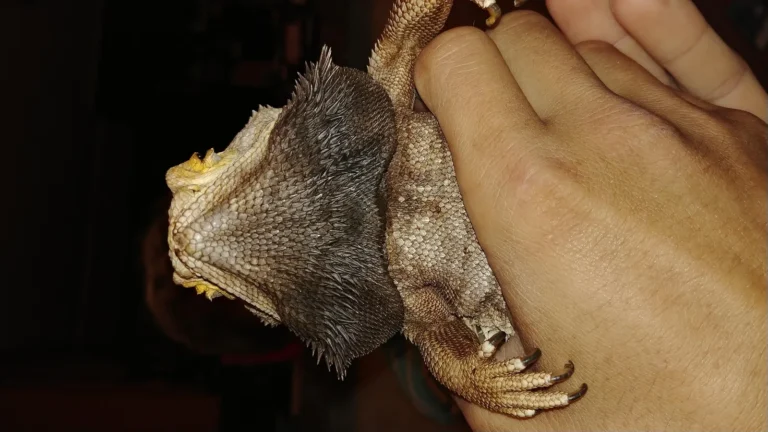
- Read the body language. Black beard, frantic scratching, body flattening, hissing — these are stop signs, not challenges. Learn to read your bearded dragon’s body language and you will rarely misjudge a session.
6 signs you’re overdoing it
Yes, you can handle a bearded dragon too much. Chronic over-handling causes stress, and chronic stress weakens the immune system, suppresses appetite, and steals basking time — which is how handling too much can indirectly contribute to serious problems like metabolic bone disease. Watch for these classic over-handling signs:
If you see these regularly, cut session length and frequency in half for two weeks and rebuild slowly. If appetite loss or lethargy persists even with handling reduced, skip the handling guides and book a reptile vet — those signs have medical causes too.
Quick answers
Can I handle my bearded dragon every day?
Yes — daily handling is ideal for most dragons past the settling-in period, as long as sessions stay within the age ranges above and you keep one or two rest days per week. Consistency beats marathon sessions.
What if my dragon runs away every time I reach in?
Drop back to the shy protocol: no lifting for a week, just calm hand-in-tank time, then five-minute sessions. Never chase a sprinting dragon around the tank — that teaches it that hands are predators. Slow, predictable, boring hands win.
Should children handle the bearded dragon?
Only with an adult present and only once the dragon is tame. Kids should sit on the floor (no fall distance), support the whole body, and keep sessions short. A dropped dragon can be seriously injured, so floor-sitting is non-negotiable.
What to Read Next
🐉 Handling is enrichment. See how daily handling fits into a bigger picture of handling as enrichment — roaming time, foraging games, and tank upgrades that keep a handled dragon genuinely happy.