9 Ways to Keep Your Bearded Dragon Happy and Active
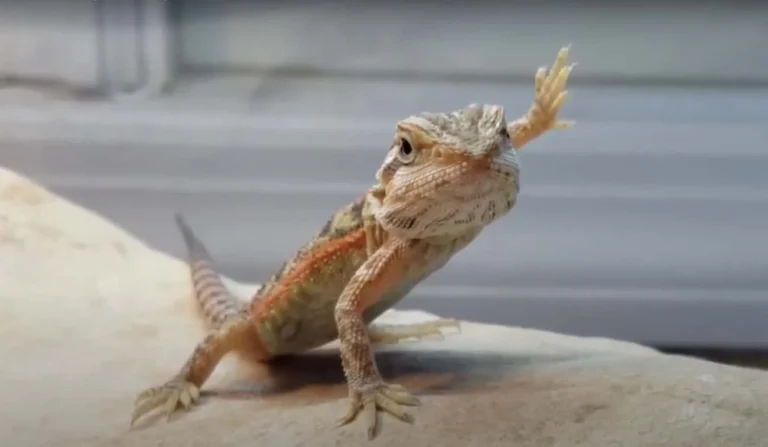
There’s a persistent myth that reptiles are too simple to get bored. It’s wrong — and bearded dragons are the proof. Watch a dragon in a bare tank and you’ll see the symptoms: glass surfing, frantic “zoomies,” lethargy, a total lack of the curiosity that makes these animals fun. Then add a dig box, scatter its food instead of bowl-feeding, or let it explore a safe room, and the same animal transforms into an active, engaged hunter-explorer. That’s not a different dragon. That’s enrichment.
Enrichment isn’t spoiling your pet — it’s meeting a need. In the wild, bearded dragons spend their days thermoregulating, foraging, climbing, digging, and watching for both prey and predators. A glass box with a food bowl removes nearly all of that mental work. The activities below put it back, sorted from five-minute wins to full weekend adventures.
Start inside the tank
The cheapest enrichment is rearrangement. Every week or two, move the branches, shift the basking platform, rotate which hide is where. For a territorial animal, a “new” layout is a new territory to patrol and investigate. (Sensitive or newly arrived dragons prefer monthly changes — watch the individual.) Add climbing branches, a hammock, and a dig box: a shallow bin of reptile-safe sand or damp coconut fiber that satisfies the powerful digging instinct. Supervise dig-box time and keep the substrate clean.
Then change how food arrives. In the wild nothing eats from a bowl. Scatter feeder insects through the tank so the dragon has to hunt them. Hang leafy greens at head height from a clip so it has to reach and tear. Stuff a few dubia roaches into a puzzle ball or an overturned cup. Foraging turns a 30-second meal into 15 minutes of problem-solving — and slows down the frantic eaters, too.
💡 Did you know? A calm bearded dragon moves slow and deliberate — that’s the body language of a relaxed animal. Frantic sprinting (“zoomies”) looks like play but usually signals something wrong with the environment: wrong temperatures, too much handling, too much noise, or too little space. If your dragon only ever moves at two speeds — statue or ricochet — the tank needs attention before the toy box does.
The bath: enrichment and hygiene in one
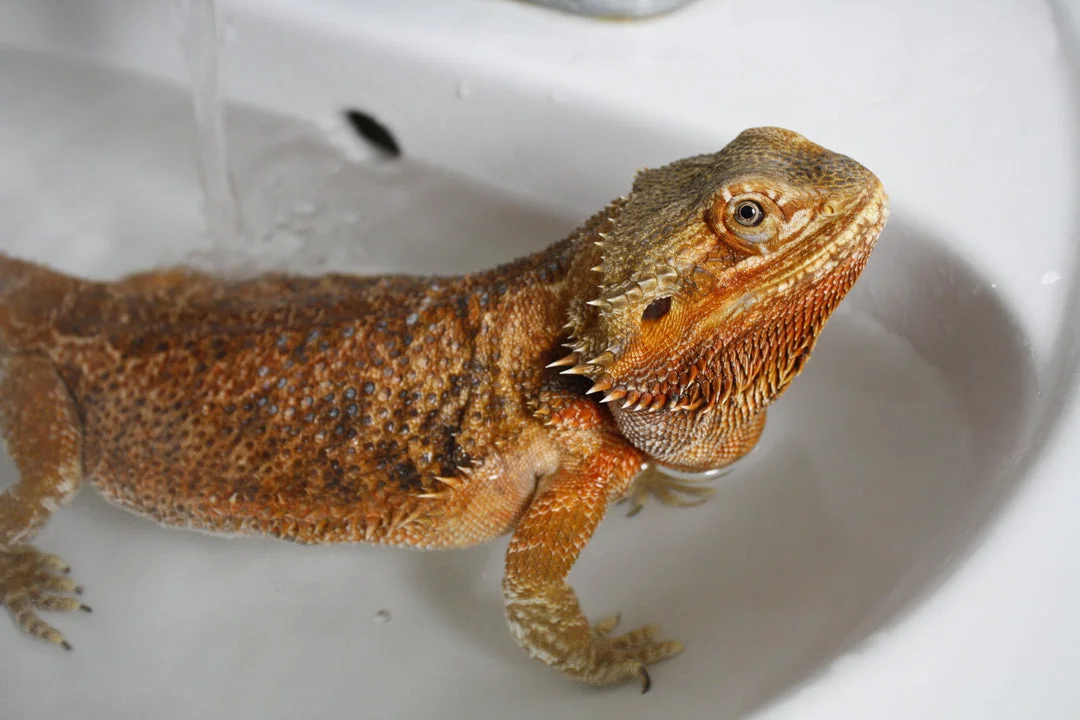
A warm bath is the Swiss army knife of bearded dragon care — hydration, shedding help, constipation relief, and genuine enrichment all at once. Many dragons visibly enjoy bath time once they’re used to it.
The protocol: lukewarm water at 85–100°F (verify with a thermometer — your wrist lies), depth no higher than the knees — about half an inch for babies, one to two inches for adults. Ten to thirty minutes is the range, with 15–20 typical. Babies can bathe three to four times a week; adults two to three times, or as needed during shedding. Put a rock or rolled towel in the tub so a nervous dragon has something to climb onto, pat the dragon completely dry with a soft towel afterward, and never leave a bathing dragon unattended — drowning is possible even in shallow water.
Supervised free-roam
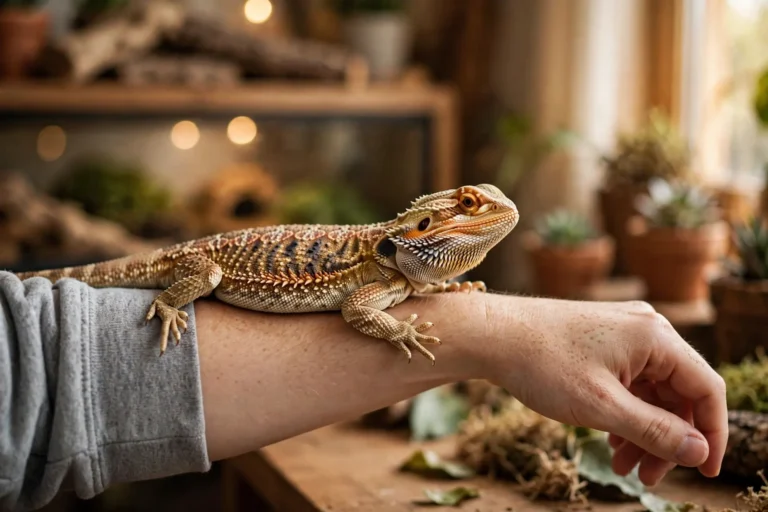
Free-roam time — exploring outside the tank in a safe room — is the single most stimulating thing most pet dragons ever do. New smells, new textures, real distances to walk. Start with one dragon-proofed room, not the whole house: remove small objects that could be swallowed, cover cords, block gaps under doors, close off stairs and escape routes. Hard floors (wood, tile) beat carpet, which catches nails and sheds ingestible fibers.
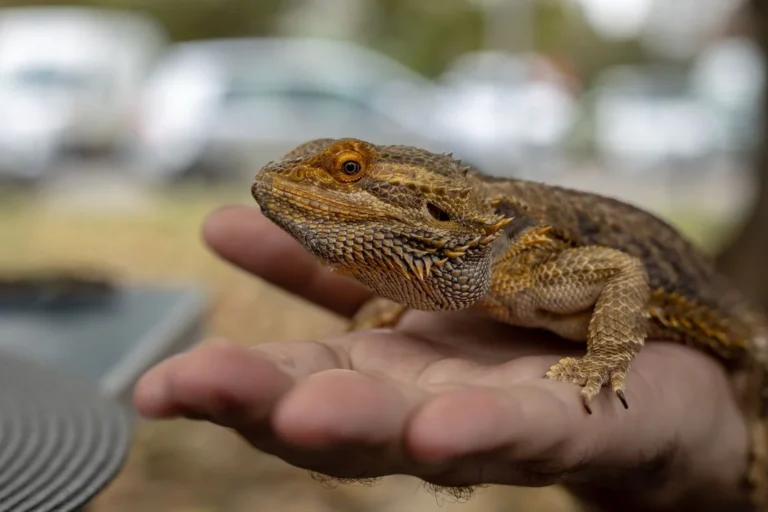
Conditions matter: room temperature at least 75°F, other pets out of the room, and you present the whole time. Start with about 30 minutes once a week and watch for stress signals — darkening, frantic running, trying to escape the room. A dragon that explores calmly, tongue-flicking, is having a great time. One that shows no interest in coming out at all is also giving you an answer: don’t force it. Not every dragon wants adventures, and that’s fine.
| Activity | Time | Cost | Best for |
|---|---|---|---|
| Scatter feeding | 5 min | Free | Daily mental work |
| Warm bath | 15–20 min | Free | Shedding, hydration |
| Dig box | 15 min | Cheap | Natural instincts |
| Free-roam | 30 min | Free | Exercise, exploration |
| Foraging puzzle | 5 min | Free | Problem-solving |
| Outdoor time | 15–20 min | Harness | Real sunshine |
Outdoor time and leash training
Real sunshine is the ultimate enrichment — full-spectrum light, new scents, actual wind. But outdoors is also where dragons get lost, grabbed by predators, or overheated, so it needs structure. The weather window: 80–95°F, sunny, not windy. Below that it’s too cold to be useful; much above and overheating becomes the risk.
Use a reptile-specific harness — never a dog or cat harness, which fits the wrong body shape and can injure a dragon. Fit should be snug with one finger’s width between harness and body. Acclimate indoors first: harness on, treats, short sessions, no pressure. Start outdoor outings at five to ten minutes and work up to 15–20 in warm weather. Bring shade and water, watch constantly for predators (birds and cats are the real threats), stick to pesticide-free areas, and end the outing at the first sign of stress — heavy breathing, agitation, or escape attempts.
📊 Stat: Bearded dragons can become bored in as little as a bare, unchanging tank — and the fix is cheap. Keepers report that weekly layout rotations, scatter feeding, and a dig box resolve most “bored” behaviors (glass surfing, lethargy, food disinterest) without any new equipment. Enrichment is the highest-return, lowest-cost upgrade in reptile keeping.
Quick wins for busy keepers
You don’t need an hour a day. The five-minute tier of enrichment fits any schedule: scatter the morning insects instead of bowl-feeding them, hang the greens from a clip, let the dragon watch the room from a window perch (glass filters UVB, so this is stimulation, not a lighting replacement), or just talk and read near the tank — your voice is auditory enrichment for an animal that learns familiar sounds. Toss a few dubias across the floor during free-roam and watch a living-room hunt unfold.
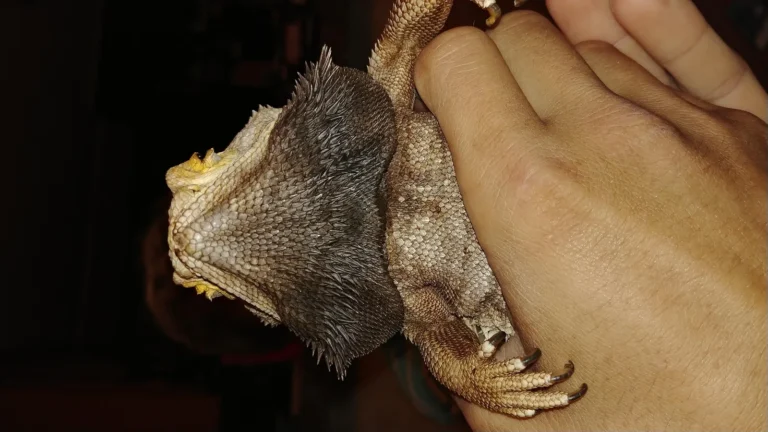
One caution on mirrors: some dragons find them fascinating, others read their reflection as a rival and stress over it. Try it, watch the reaction, and remove the mirror at the first black beard. Enrichment should never be something the dragon needs rescuing from.
Pick today’s activities
Filter the activity cards by how much time you have, then tick boxes to build today’s play session. Aim for at least one foraging-type activity a day — it’s the closest thing to a wild dragon’s job.
Enrichment Activity Picker
Filter by how much time you have — then build today’s session below.
Build today’s play session
Enrichment questions, answered
How often should I do enrichment activities?
Daily micro-enrichment (scatter feeding, rearranged food presentation) plus two to three bigger sessions a week (bath, free-roam, dig box). Consistency beats intensity — five minutes of foraging every day does more than an hour-long adventure once a month.
My dragon just sits in its tank all day. Is it bored or sick?
Check the basics first: basking temperature, UVB age, and whether it's brumation season — all three cause inactivity that looks like boredom. If husbandry is correct and the dragon is alert, eating, and responsive, try enrichment for two weeks and watch for change. If inactivity comes with appetite loss, weight loss, or lethargy, see a reptile vet instead.
Are toys from the pet store worth buying?
Most "reptile toys" are repackaged dog toys. The best enrichment is nearly free: cardboard boxes to explore, crumpled paper to forage through, a shallow bin of damp coconut fiber to dig in, feeder insects scattered instead of bowled. Spend the money on a good harness and a digital thermometer instead.
Can I take my bearded dragon outside without a leash?
Don't. Even a calm dragon can bolt when startled — a bird shadow, a dog bark — and a loose dragon outdoors is a lost dragon. A secure pen or a well-fitted reptile harness, with you supervising every second, is the only safe way to do outdoor time.