What Tongue Flicking Tells You About Your Dragon
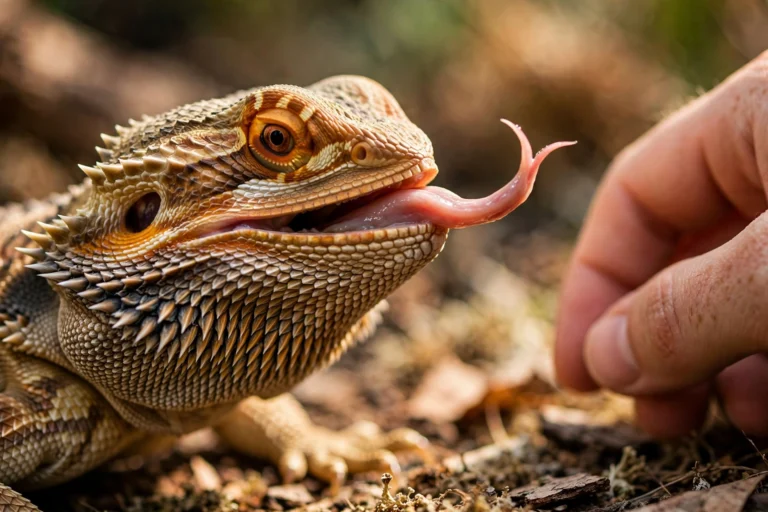
It happens ten times a day and most owners barely register it: the quick dart of a pink tongue, out and back in a blink, aimed at nothing you can see. Sometimes it is lazy — one slow flick while the dragon stares at the wall. Sometimes it is frantic — rapid flicking at a new decoration, your hand, or a cricket across the tank. Same tongue, completely different messages.
Tongue flicking is how bearded dragons smell the world, and the rate plus the context tells you which world they think they are in: curiosity, hunting, or stress. This guide explains the scent organ behind the flick, decodes the three flick modes, and includes a 30-second tap counter that scores a real flicking session from your own dragon — so the next flick actually tells you something.
The Jacobson’s Organ: How Dragons “Smell”
A tongue flick is a sample run. The tongue darts out, picks up airborne and surface scent particles, and delivers them to the Jacobson’s organ (the vomeronasal organ) — a specialized scent analyzer in the roof of the mouth. It is a completely separate system from the nostrils, and for a bearded dragon it is the primary way of identifying what things are: food, another dragon, a new object, your hand.
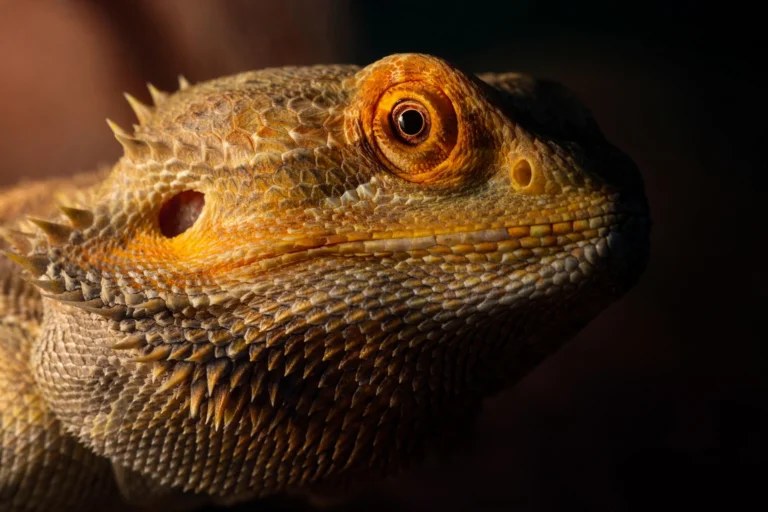
This is why the flick rate tracks novelty so closely. A familiar basking rock gets almost no flicks — it has been catalogued. A new hide, a rearranged branch, or a hand that smells like lunch gets a flurry. The tongue is asking a question, and the answer decides what happens next: approach, eat, or ignore. Bearded dragons are famously visual animals — that light-sensitive third eye on top of the head watches the sky — but for close-range identification, the tongue does the work.
Snakes are the famous tongue-flickers, but the hardware is ancient and shared: the Jacobson’s organ predates both groups. In bearded dragons it sits in the roof of the mouth, and each flick physically ferries scent particles to it — the tongue is a delivery service, not the sensor itself.
The Three Flick Modes
- Exploratory flicking — slow and deliberate. One flick every few seconds, aimed at surroundings, while the dragon moves calmly or sits alert. This is cataloguing: “what is this, what is that.” It is the default mode of a comfortable, curious dragon and the one you want to see most.
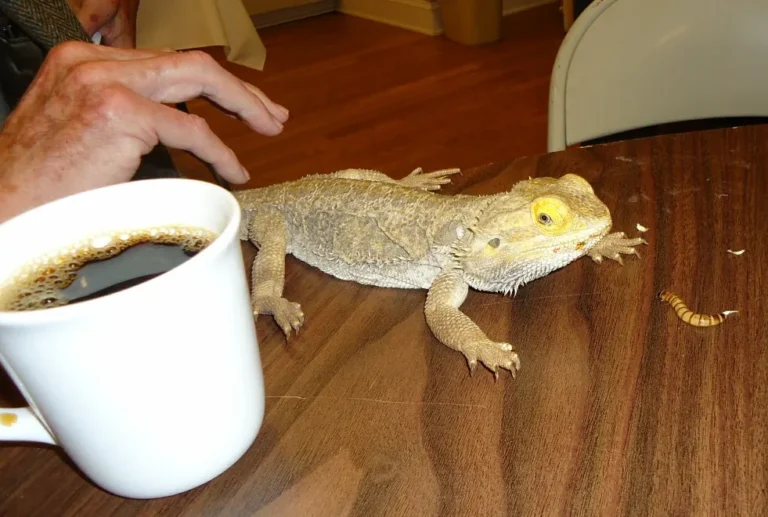
- Food-targeted flicking — rapid and aimed. Fast flicks locked onto a moving insect, a salad bowl, or your fingers if they smell like food. The flicks track the target. This is hunting mode, and it is usually followed by the head cocking and the lunge. Totally normal, totally healthy.
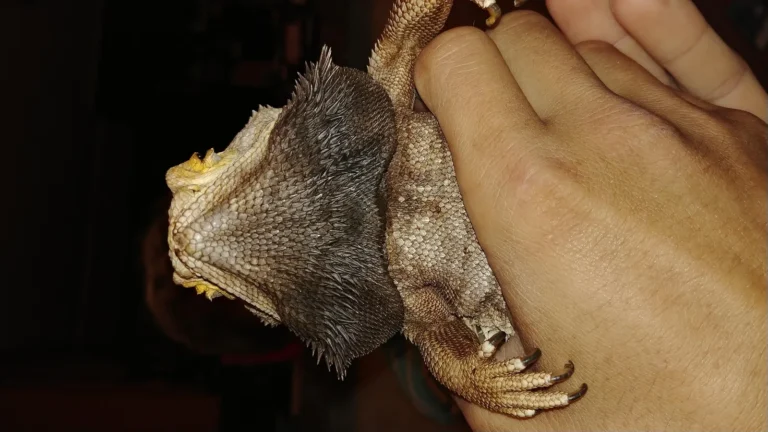
- Arousal flicking — rapid and unfocused. Fast flicks with no clear target, often paired with a darkening beard, an upright alert posture, or gaping. The dragon is overstimulated — by a perceived threat, a rival’s scent, or handling that has gone on too long. The message is not curiosity; it is agitation.
Speed alone never settles it — rapid flicks at a cricket and rapid flicks at a looming stranger look similar in isolation. That is why the counter above asks for context: rate narrows it down, context closes the case. Our bearded dragon body language guide covers the postures that pair with each mode.
In a calm exploratory session, owners typically count roughly 5–14 flicks per 30 seconds — about one every 2–6 seconds. Sustained rates far above that, with no food or novelty present, are worth a second look at what might be agitating your dragon.
Tongue Flicking During Handling
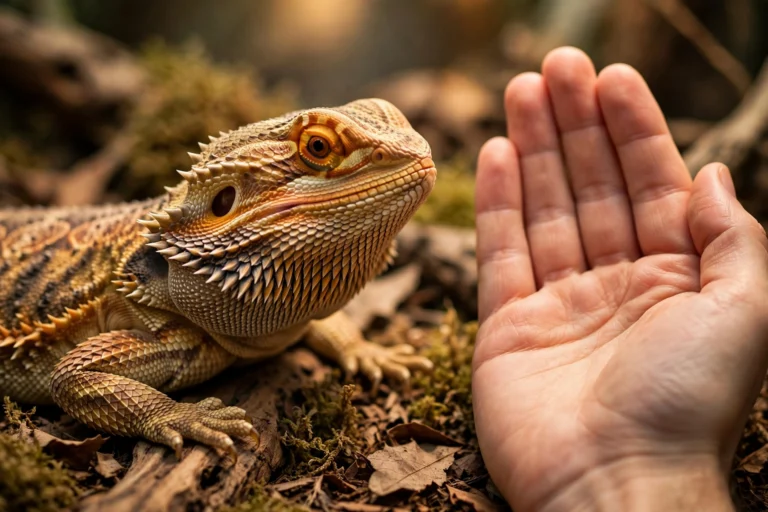
Flicks aimed at your hand are usually a good sign wearing a confusing costume. A dragon being held that tongue-flicks your fingers, sleeve, or the air around you is sampling you — learning your scent. Slow, intermittent flicks during handling generally mean a calm, curious animal. This is one of the small signals that taming is working: the dragon investigates the hand instead of fleeing it.
The flip side: rapid, continuous flicking the entire time you hold the dragon, especially with a dark beard or rigid body, means the session has tipped from investigation into stress. Put the dragon back, keep sessions shorter next time, and let curiosity rebuild at the animal’s pace. A tongue that never stops is a dragon asking to be put down.
New Objects Deserve a Flick Storm
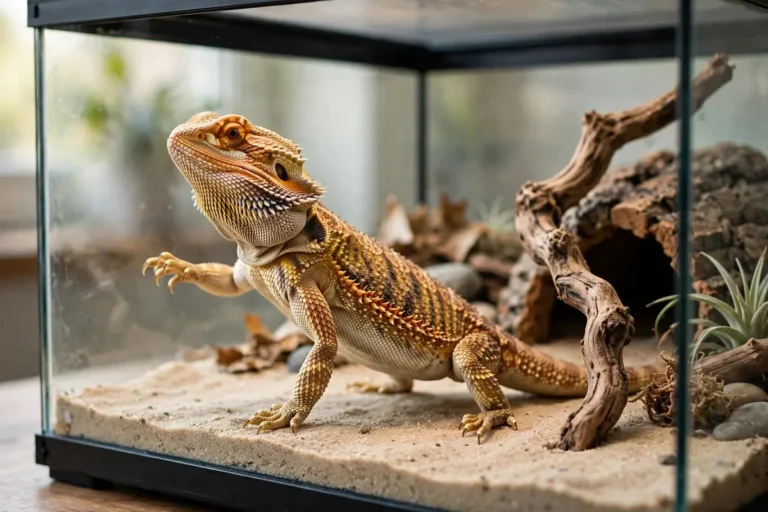
Rearrange the tank, add a new hide, or dangle a novel toy, and expect a flicking burst — this is the system working at full volume on uncatalogued input. It is also why enrichment that introduces novelty (new textures, scents, foraging puzzles) produces some of the most animated behavior you will see: the tongue goes first, the feet follow. A dragon that flicks eagerly at new things is a mentally engaged dragon.
One practical note: wash new decor before introducing it, and skip anything with strong chemical odors. The organ the tongue serves is sensitive by design — a decoration off-gassing plastic smell will get flicked at frantically, and not in a good way.
Claim: “A dragon that flicks its tongue at you likes you.” Verdict: half-true. It means the dragon is investigating you rather than fearing you — which is positive — but the tongue itself reports chemistry, not affection. Read it as curiosity, the prerequisite for trust.
When Tongue Behavior Signals a Problem
Almost all tongue flicking is healthy. The exceptions are about pattern, not single flicks. Constant flicking paired with gaping, wheezing, mucus around the nostrils, or lethargy is a different picture — those combined signs can indicate a respiratory issue, and that combination belongs in front of a reptile veterinarian, not a wait-and-see list. Similarly, a tongue that hangs out and will not retract, or visible swelling or injury to the tongue or jaw, needs professional assessment promptly.
What does not need a vet: a dragon that flicks less than it used to (familiar environments need less sampling), one that flicks a lot at dinner (that is appetite, beautifully expressed), or one that flicks at the glass when you walk by (you are the most interesting thing in the room). Describe behavior in terms of changes from the individual dragon’s normal — that is the information a vet can actually use.
Myth: Frequent tongue flicking means the dragon is stressed. Reality: Frequency alone means arousal, and arousal includes excitement, curiosity, and appetite. Stress is rapid flicking plus the stress postures — dark beard, rigid body, hiding. The tongue reports; the body interprets.
Start Reading the Flicks
The next time your dragon flicks, run the two-question decode: how fast, and what’s happening? Slow flicks in a calm tank are a content animal reading its newspaper. Rapid flicks at food are dinner being located. Rapid flicks at nothing, with the body tense, are worth investigating. It is a small behavior, but it is one of the few windows into what the animal is actually perceiving — most of reptile keeping is guessing at internal states, and the tongue is one of the honest signals. Count a session with the tool above, compare it to your dragon’s usual, and you will start noticing the difference between “what’s this?” and “dinner!” within a week.
Put that curiosity to work: give that tongue new things to investigate — enrichment ideas your dragon will actually use.