Can Bearded Dragons See in the Dark?
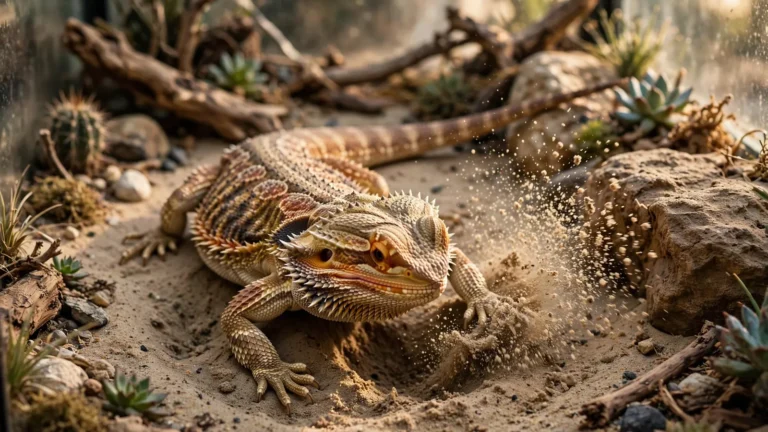
You flip the tank lights off, glance back a minute later, and there it is: your bearded dragon, eyes wide open, staring straight at you from the dark. It feels like it can see you perfectly. So here is the question that moment plants in every owner’s head — when the lights go out, does your dragon keep watching, or does the world go black for them too?
That open-eyed stare from the shadows is not night vision at work. It is a sleeping (or half-sleeping) animal whose eyelids simply have not finished closing. Understanding what is actually happening inside those eyes will change how you light the tank — especially at night.
Humans see with three types of color cone cells (red, green, blue). Bearded dragons have four — the fourth tuned to ultraviolet light. That single extra cone type multiplies the colors they can distinguish into the millions, including patterns on insects, plants, and other dragons that are completely invisible to us.
An Eye Built for the Midday Sun
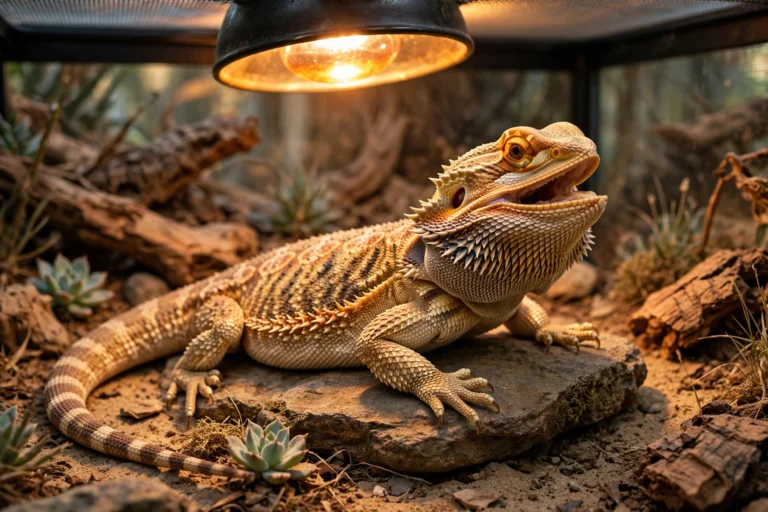
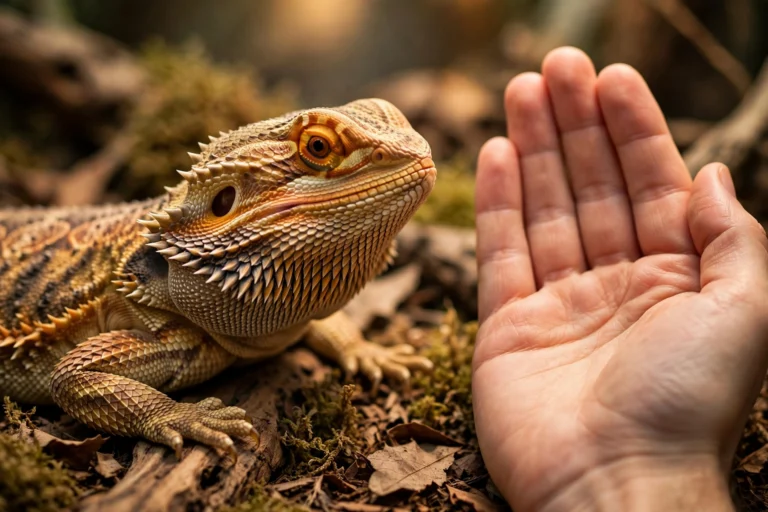
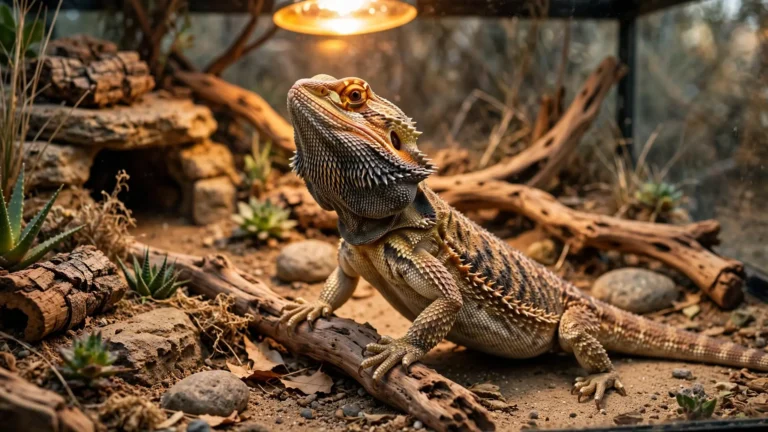
A bearded dragon’s eye is engineered for one job: dominating bright daylight. The eyes sit on the sides of the head, giving a near-panoramic field of view — excellent for spotting a cricket to the left and a hawk-shaped shadow above at the same time. Each eye can also move somewhat independently, so the dragon can track prey with one eye while the other keeps watch for danger.
Inside, the retina is packed with cones — the photoreceptors that handle bright light and color — and relatively sparse in rods, the receptors that handle dim light. That ratio is the whole story of this article: cones need abundant light to fire, so an eye built mostly of cones goes quiet when the light fades. There is also a nictitating membrane, a translucent third eyelid that sweeps across the eye to clear dust without blocking sight — handy in a windy desert.
And then there is the famous third eye, the parietal eye on top of the head. It is not a true eye — it cannot form images — but it works as a light meter wired straight into the brain’s clock, sensing whether it is day or night even when the main eyes are closed.
“Bearded dragons can see in the dark like cats.” False. Cats are nocturnal predators with rod-dominated retinas and a reflective tapetum lucidum behind the retina. Bearded dragons are diurnal baskers with cone-dominated retinas and no such low-light hardware. The two eye designs are opposites, built for opposite schedules.
What Daylight Looks Like to a Dragon
In full light, your dragon’s vision is arguably better than yours. That fourth, UV-sensitive cone means flowers, fruits, and feeder insects carry glowing patterns you will never see — many insects have UV-reflective markings that make them stand out like beacons to a hunting dragon. Males’ throat and body color shifts during courtship and dominance displays include UV components, so the famous black beard is broadcasting on a channel we cannot receive.
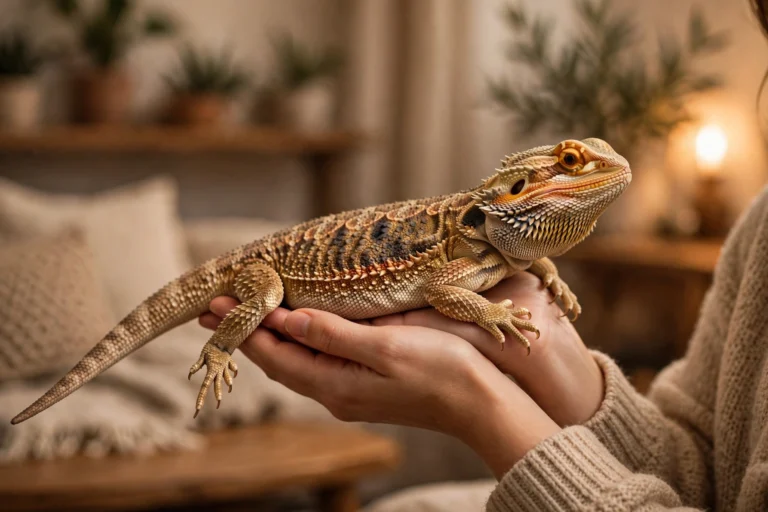
This is also why bright, full-spectrum daytime lighting matters so much. A dim tank does not just look gloomy to you — it literally narrows your dragon’s world, muting the UV cues it uses to find food and read other dragons. And because dragons partly recognize their owners by sight, good lighting is part of the bond: you are simply more visible, more colorful, and more interesting under a proper basking lamp than under a dim bulb.
The third eye never truly clocks out. Even with the eyelids shut, the parietal eye keeps sensing light and dark through the thin skull — which is why a lamp left on at night, or a streetlight leaking through a window, can quietly scramble your dragon's sleep even when its eyes are closed.
What the Dark Actually Looks Like
Now the other end of the trade. When light levels fall, cones stop firing — and because a bearded dragon's retina carries relatively few rods, there is no meaningful backup system. Twilight is already a struggle: by true darkness, the world is effectively gone. A dragon in a dark room is not seeing shapes, watching you move, or tracking the cat. At best it registers vague shifts in brightness — and even that mostly through the third eye's light-meter, not through anything resembling sight.
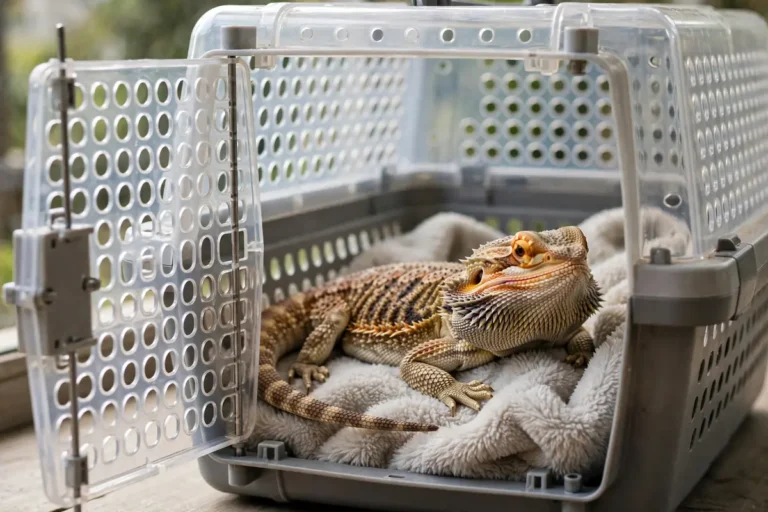
This is completely normal, and it is why healthy dragons go still and sleep through the night. It also explains a common owner mistake: reaching into a dark tank to "check on" a sleeping dragon. To the dragon, a hand arriving out of pitch black is not a friendly visit — it is a large shape materializing from nothing, which is why startled night handling so often ends in a black beard or a bolt. If you must interact after dark, turn the room light on first and give the eyes a minute to wake up.
Lighting Takeaways for Owners
Once you understand the day-blind-at-night design, the lighting rules write themselves:
Days should be bright. A strong white basking light plus proper UVB gives all four cone types the photons they need. Keep the day/night cycle steady at roughly 12–14 hours of light, since the third eye uses that rhythm to run the body clock.
Nights should be truly dark. Nocturnal "moonlight" bulbs, red bulbs, and blue bulbs are all visible to a bearded dragon — dragons see red perfectly well — and they disrupt sleep. If the tank needs night heating without light, a ceramic heat emitter or deep heat projector gives warmth with zero glow. There is a full breakdown of why colored night lighting backfires in our guide to red light at night.
Respect the shutdown. A dragon that freezes and closes its eyes when the lights drop is not broken or scared — it is doing exactly what a cone-dominant retina demands. Let the dark be dark.
One caveat worth a vet visit: if an eye looks cloudy, swollen, or has discharge in daylight — or your dragon keeps one eye closed while basking — that is not a vision quirk. Describe the signs to a reptile vet rather than guessing.
Quick Answers
Can bearded dragons see red light?
Yes — their red cone works fine, which is exactly the problem. A red "night" bulb looks like dim daylight to them, not darkness, so it can suppress rest and irritate the eyes over time.
Should I leave a light on at night so my dragon can see?
No. They do not need to see at night — they need to sleep. Total darkness plus warmth (a ceramic heat emitter if your room drops below about 65°F) is the correct setup.
Why does my dragon sleep with its eyes half open?
Common and usually harmless — dragons sometimes doze with lids partly open, especially in new surroundings. The third eye still tracks light and dark, so keep the room dark regardless of what the eyelids are doing.
What to Read Next
Give them real darkness tonight: pair total lights-out with flameless warmth — see how to run night heating with zero light so the third eye gets the blackout it is asking for.