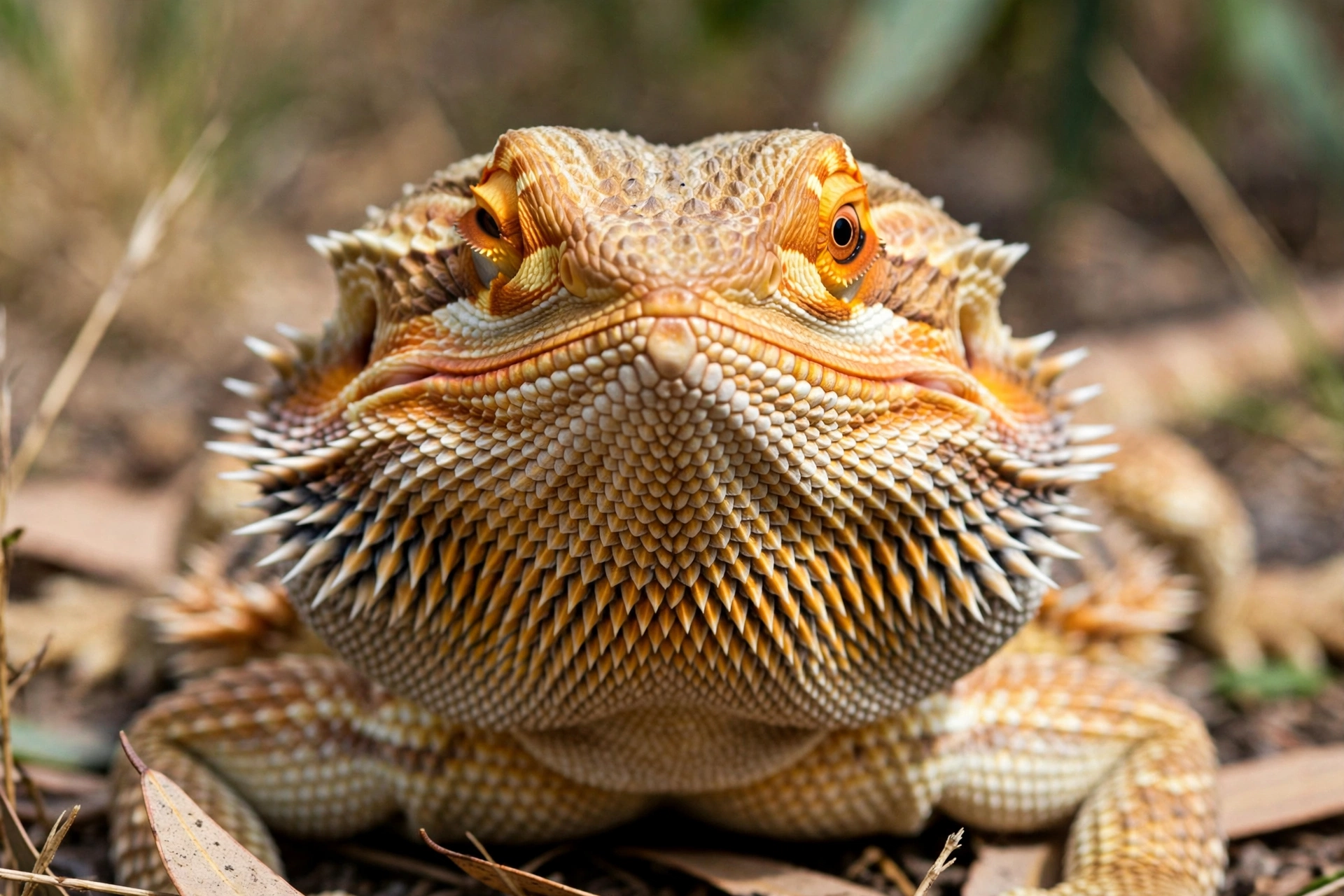
Bearded Dragon Squinting With One Eye Closed?
One eye open, one eye shut — and suddenly the calmest owner becomes a search engine. A bearded dragon squinting or keeping one eye closed looks wrong in a way that demands an explanation, and the internet offers plenty, ranging from “totally normal” to “emergency,” often on the same page. The truth is less dramatic than either extreme: squinting is a symptom with a short list of usual causes, and a 30-second eye check separates the harmless ones from the ones that need a reptile vet.
This guide walks through that 30-second check, ranks the seven most common causes from most to least likely, and includes a visual eye-state gallery so you can match what you are seeing to what it usually means. One boundary, stated up front: this article describes signs and next steps. It does not diagnose — only a reptile veterinarian examining the animal can do that.
The 30-Second Eye Check
Before theorizing, look. Get close (without stressing the animal) and run through four observations in order:
- Is there discharge? Any wetness, crusting, or mucus around the eye — clear or colored — moves this out of “wait and see” territory. Note what it looks like; a vet will ask.
- Is it swollen? Compare both eyes. Puffiness, a bulging eyelid, or asymmetry between the two sides is a warning sign, especially if it appeared quickly.
- Is there stuck shed? Look for dull, papery skin clinging around the eyelid or the corner of the eye. Shed that has not cleared from around the eye is a common, fixable irritant.
- Where is the UVB lamp? Check the distance and whether the bulb shines directly into the dragon’s usual basking line of sight. Lighting is the single most common environmental cause — verify it before assuming illness.
If the answers are no, no, no, and the lamp looks right, you are most likely looking at one of the benign causes below. If any answer is yes — especially discharge or swelling — skip ahead to the vet section. Our companion guide to bearded dragon eye bulging covers the other common eye symptom and how the two differ.
Bearded dragons can close each eye independently, and often do — one eye shut while the other tracks you is not necessarily a symptom at all. It becomes worth investigating when the same eye stays closed across hours, or the closed eye shows discharge, swelling, or stuck shed.
The 7 Causes of Squinting, Ranked
- 1. Normal relaxation. The most common “cause” is not a cause. A comfortable dragon basking or resting will let one or both eyelids droop to half-mast. The eye underneath is clear, there is no discharge, and the dragon opens it promptly when something interesting happens. No action needed.
- 2. UVB glare or wrong distance. A UVB bulb mounted too close, or a compact/coil bulb glaring sideways into the dragon’s eyes rather than shining down from above, commonly produces squinting — the reptile equivalent of shading your eyes. Check your UVB lighting setup and distances; linear tubes mounted overhead at the correct height fix most cases.
- 3. Shed around the eye. Dull retained skin clinging to the eyelid margin itches and irritates, and the dragon squints against it. Do not pull it — raise humidity slightly with a warm soak and let it release on its own. Persistent stuck shed around the eye deserves a vet’s look, since the eye underneath can be affected.
- 4. Dehydration. Sunken, dull, or half-closed eyes can accompany dehydration, usually alongside other signs like wrinkled skin and lethargy. Review the dehydration signs checklist and correct water intake — the eyes typically brighten as hydration improves.
- 5. Debris or irritant. A speck of substrate, dust from a recent tank cleaning, or feeders’ debris can lodge near the eye. Gentle saline-free lukewarm water — a damp cotton pad held near, not pressed on, the eye — can help dislodge surface debris. If the dragon keeps the eye shut afterward, assume something remains and get it checked.
- 6. Injury. A scratch from decor, a tankmate’s claw (another reason solitary housing matters), or a bump during handling can make the eye sore and watery. Eye injuries are not wait-and-see: the eye is too delicate for home treatment, and what looks minor can involve the cornea.
- 7. Infection. Bacterial or other infections typically announce themselves with the warning trio — swelling, discharge, and an eye the dragon will not open. This is firmly veterinary territory; eye infections can progress quickly and need professional diagnosis and treatment.
UVB and Eyes: Getting the Distance Right
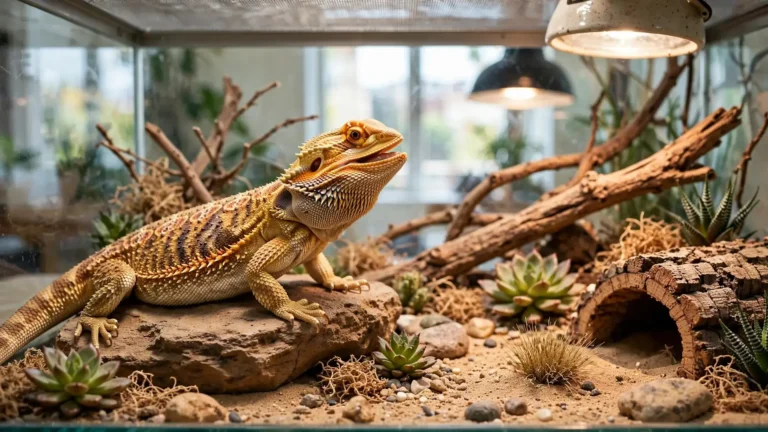
Because lighting causes so many squinting cases, it deserves its own double-check. The classic setup error is a compact UVB bulb screwed into a dome that sits beside the basking spot at eye level, blasting sideways into the dragon’s face all day. The fix is structural: a linear UVB tube spanning much of the enclosure, mounted overhead so light comes from above as the sun does, at the manufacturer-recommended distance for your specific bulb strength.
Mesh screens complicate this — a fine mesh can filter a large fraction of UVB, tempting owners to mount the bulb closer, which then creates the glare problem. Our guide to mesh screens and UVB mounting walks through inside-versus-above mounting so you get adequate UVB without an eye-level spotlight. After any lighting change, give the dragon a few days: squinting from glare usually eases once the irritant is gone.
Claim: “If the UVB bulb is new, it can’t be the problem.” Verdict: false. Brand-new bulbs cause a specific version of this issue — fresh tubes can output strongly in the first weeks, and a new bulb mounted too close is a classic squinting trigger. New does not mean correctly placed.
When the Vet Visit Can’t Wait
Contact a reptile veterinarian promptly for any of the following: discharge of any kind around the eye, swelling or asymmetry between the eyes, an eye the dragon will not open at all for more than a day, a known injury to the eye area, or squinting paired with lethargy, appetite loss, or respiratory signs like gaping or mucus. Describe exactly what you see — when it started, which eye, discharge appearance, recent lighting or shed changes — and let the vet determine the cause.
Do not apply eye drops, ointments, or home remedies unless a reptile vet instructs you to; the wrong product in a reptile eye can cause real harm, and flushing an injured eye incorrectly can make things worse. Note that squinting with respiratory signs (open-mouth breathing, clicking, mucus) points toward our respiratory infection signs guide — mention the combination to the vet, since it changes the assessment.
Myth: One closed eye always means infection. Reality: Most one-eye squinting traces to relaxation, lighting, shed, or minor irritation. Infection is real but it announces itself — with swelling, discharge, or an eye that won’t open. Treat the warning signs as the trigger for a vet visit, not the squint alone.
The Calm Way to Read a Squint
Work the list in order: 30-second check, benign causes first, lighting double-check, vet for the warning signs. Most squinting episodes resolve into something ordinary — a sleepy dragon, a bulb that needed moving, a bit of shed that needed patience. The owners who handle it best are not the ones who never worry; they are the ones who check the eye, check the lamp, and know exactly which signs mean “call the vet today.” Now you are one of them.
Good context: Clear, bright eyes are sign #3 of a healthy dragon — see all 12 signs of a healthy bearded dragon so you know what “normal” looks like everywhere else too.