How to Pick Up a Bearded Dragon Without Stressing It
It is day three with your new bearded dragon. She is basking on her rock, colors calm, eyes bright — and you decide it is time for the first real pick-up. Your hand hovers above the tank. She freezes. Her beard darkens a shade. In the next two seconds, this either becomes the start of a routine she accepts, or the moment she files you under “predator.” The difference is entirely technique — and it is simpler than most owners expect.
The Pick-Up Stepper: Learn the Sequence First
Before you reach into the tank, walk through the four steps below. Each step has a checkpoint — confirm it before the stepper lets you advance. By the end you will have the whole sequence memorized: approach, scoop, support, hold.
Sequence learned — now go practice it
Approach from the side, scoop flat-palmed under the belly, support the rear with your second hand, and hold low and close. Do it the same way every time: consistency is what turns a nervous dragon into a calm one.
Why Technique Matters So Much
In the wild, the things that kill bearded dragons come from above: hawks, kookaburras, and other birds of prey strike downward. Your dragon does not know your hand is attached to a friend. A hand descending from overhead triggers the same ancient alarm as a raptor's shadow — flattening the body, darkening the beard, and bolting for cover. Handle from above often enough and some dragons start treating every open tank lid as a threat.
That is why the side-on scoop works. When your hand comes in level with the dragon and slides underneath, nothing in her instincts reads it as an attack. Done the same calm way every time, the pick-up becomes background noise rather than an event — and that is exactly how trust is built. Owners who want the long game usually pair good technique with the 4-week taming program, which layers handling onto daily trust-building.
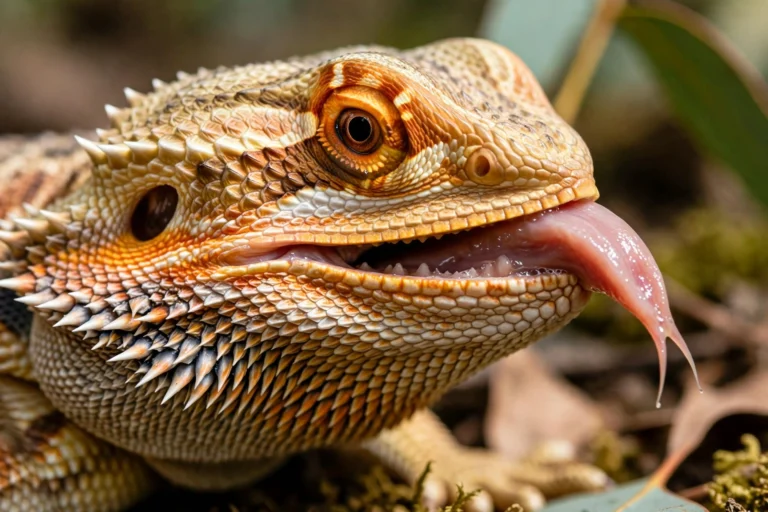
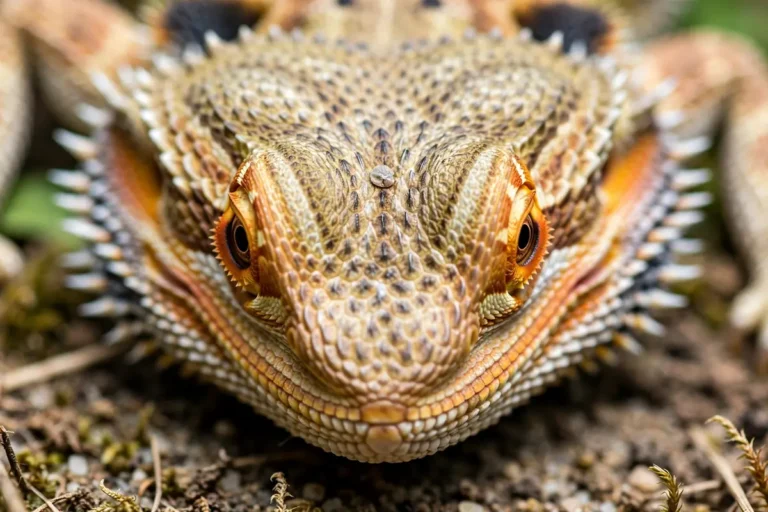
Bearded dragons have a parietal eye — a light-sensing "third eye" on top of the head. It cannot form images, but it detects shadows and changes in light from above, which is exactly how wild dragons spot approaching birds. This is the biological reason an overhead hand reads as a predator while a hand at eye level does not.
The Four Steps in Detail
1. Read her before you reach
Thirty seconds of observation saves a bad session. A relaxed dragon shows normal coloring, a calm body, and maybe curiosity — a head tilt toward your hand. A dragon showing readiness signals like these is a green light. A black puffed beard, hissing, or frantic movement is a red light: skip this session entirely and try again later. Forcing a pick-up on a stressed dragon teaches her that hands are something to fear.
2. Scoop, don't grab
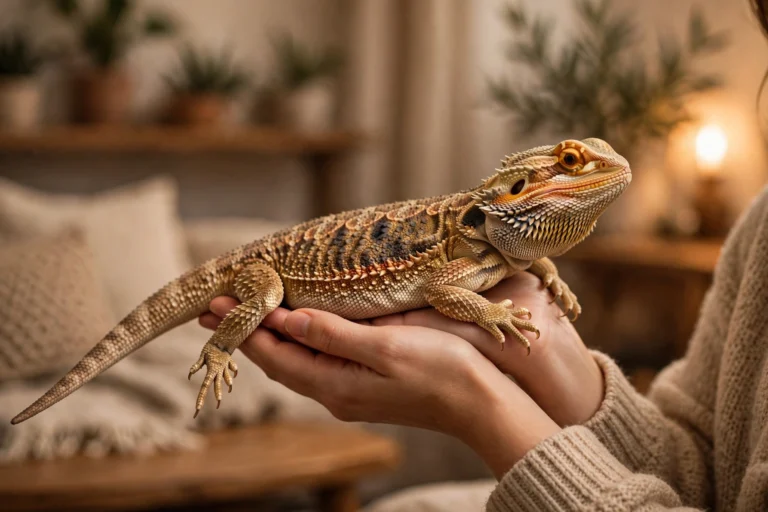
Slide your flat palm under her chest and belly in one level motion, fingers spread wide. The chest and pelvis should be supported together — lifting by the midsection alone puts pressure on the spine and organs, and a squeezed midsection is one of the fastest ways to get bitten. Keep your hand level; the moment she tilts sideways, her feet scramble for purchase and the calm is gone.
3. Two hands, whole body
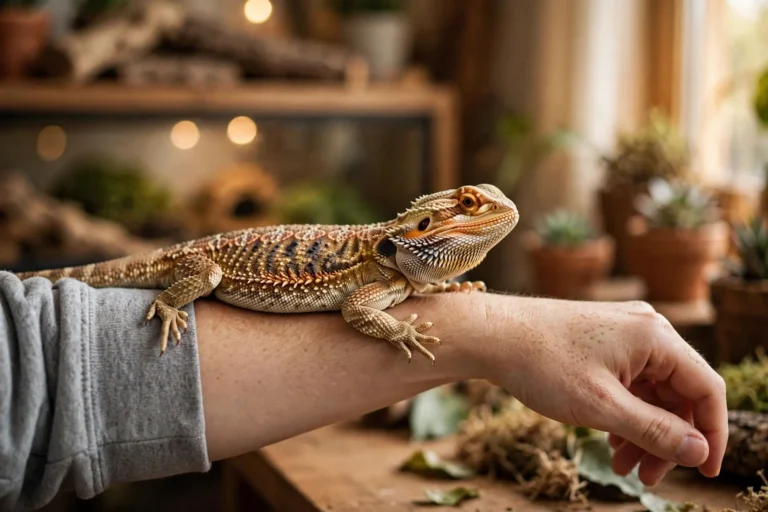
The instant she is off the ground, your second hand goes under her rear legs and the base of the tail. All four feet plus the tail base need to rest on something solid. Dangling legs read as falling, and a dragon that feels like she is falling will do exactly what a falling animal does: thrash. Never lift by the tail or a single limb, even briefly — tails and legs are easily injured and it destroys trust fast.
4. Hold low and watch
Keep her low — over your lap, the couch cushions, or just above the open tank — so a sudden leap lands on something soft, never a hard floor. Hold securely but gently: firm enough that she cannot slip, never a squeeze. A tight grip can stress a dragon badly and, in a worst case, injure ribs or limbs. This same gentle two-hand hold doubles as the secure hold for nail trims you will use later, so it is worth getting right early. Watch her the whole time; calm colors mean continue, and when she has had enough, lower your hands into the tank and let her walk off.
5 Mistakes That Undo Your Progress
- Grabbing from above. The number-one beginner error. Even gentle owners trigger the predator response when the hand drops from overhead. Side or front, every single time.
- Chasing a dragon that runs. If she bolts, let her go and try later. Chasing teaches her that your hands pursue — the exact opposite of what you want her to learn. Hand-feeding a treat and letting her approach you rebuilds the association.
- Squeezing to keep control. A frightened dragon that gets squeezed learns that struggling makes things worse, so she escalates — biting, thrashing, or full shutdown. If she is too squirmy to hold loosely, she is telling you the session is over.
- Holding high over a hard floor. Dragons leap without warning, especially young ones. A fall onto tile from chest height can break bones. Default position: seated, dragon low, soft landing always within reach.
- Picking up at the wrong moment. Right after a scare, during frantic activity, or when she is showing 8 signs your dragon is stressed — these are sessions to skip. Handling should predictably mean calm, not sometimes-calm.
Myth: "Grab quickly before it runs away — speed gets the job done." Reality: Speed is what predators use. A fast grab triggers the flight response, and the dragon that was merely wary becomes genuinely afraid of your hands. Slow, predictable, and confident wins every time; the pick-up that takes ten extra seconds is the one she will tolerate tomorrow too.
Your First-Week Practice Plan
New dragons need grace during first-week handling. Rushing the timeline is the most common reason pick-ups stay stressful for months. Follow this progression and let her set the pace — if a day goes badly, repeat the previous day rather than pushing forward.
Rest your hand in the tank. Let her see it, sniff it, walk past it. Offer a treat from your fingers. No pick-up attempts at all.
Slide your flat hand under her belly, lift one inch, set her straight back down. Repeat a few times. She learns the scoop predicts nothing scary.
Full two-hand pick-up, held low for two to three minutes, then back. End while she is still calm so the session finishes on a win.
Five to ten minutes of calm holding. If she settles — relaxed body, normal colors — you have your baseline. Build from here gradually.
Quick Answers
Stop reaching for a few days and switch to hand-feeding: offer favorite insects from your fingers so your hand predicts food, not capture. When you resume, try the scoop rehearsal from the practice plan — a one-inch lift that ends immediately. Most runners come around within two weeks once the chase stops.
Never. Unlike some lizards, bearded dragons cannot drop and regrow their tails, so a tail injury is permanent. Lifting by the tail causes pain, panic, and serious spinal stress — always lift with the body fully supported from below.
Lower both hands into the tank until your palms rest on the floor or a basking surface, then wait. Let her walk off your hands on her own terms rather than tipping or dropping her. The put-down is part of the technique — a clumsy ending can undo a calm session.
Yes, before and after. Washing before removes food smells that can trigger a feeding bite and protects your dragon from anything on your skin; washing after is basic reptile hygiene, since reptiles can carry salmonella. Warm water and plain soap is all you need.
What to Read Next
Once the pick-up is routine, put that trust to work — here are bonding activities you and your dragon can actually enjoy together.